
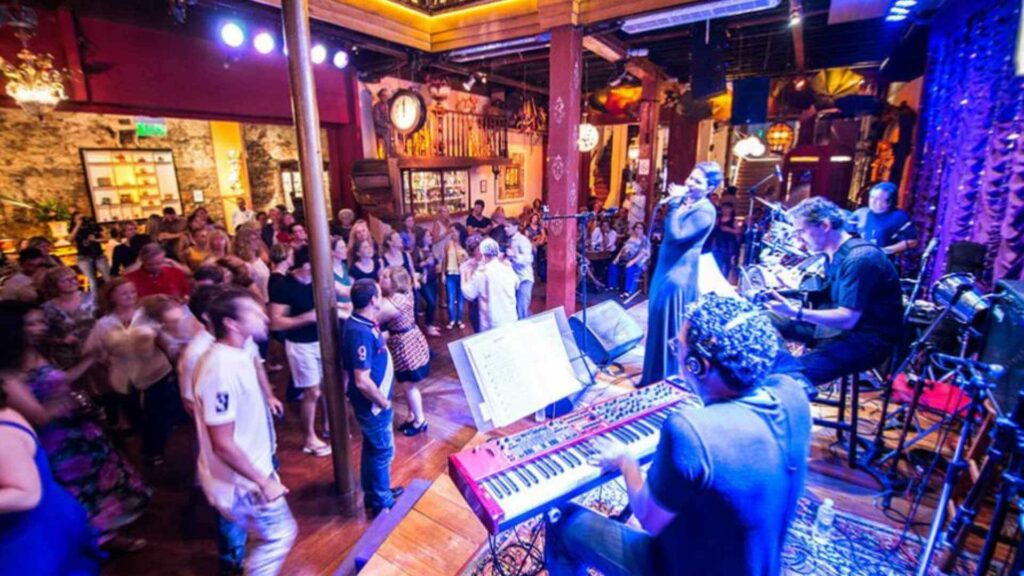
Rio de Janeiro nightlife has a clear center of gravity, and it isn’t the beach. When Copacabana and Ipanema empty out at sunset, the city’s actual party moves to Lapa, a neighborhood most tourists never make it to unless someone points them there first.
We wrote this from Copacabana, running samba nights out for visitors since 2009. Everything below is the version of Rio’s nightlife locals actually live, not the version sold in a hotel brochure.
Want to experience it with a local, not alone?
Our rio night tour includes a samba class, transport, and a guide who knows exactly where to take you.
What Makes Rio de Janeiro Nightlife Different?
Most cities have a nightlife district built around bars and clubs. Rio’s is built around live music, specifically samba, choro, and pagode played in small rooms by real bands, not DJs. The energy comes from the crowd singing along as much as from the band on stage, and the best nights aren’t the ones with the biggest cover charge, they’re the ones with the best roda de samba.
That distinction matters because it means Rio’s nightlife rewards knowing where to go, not just showing up somewhere central. A random bar in the tourist zone and a boteco three streets into Lapa can be worlds apart in what actually happens there after 10pm.
Lapa: The Heart of Rio de Janeiro Nightlife
Lapa sits on the edge of Centro, marked by two unmistakable landmarks. The Arcos da Lapa, a mid-18th-century aqueduct with 42 arches standing 64 meters high, was originally built to carry water into the city; today the area underneath fills with food and drink stalls once the sun goes down. Nearby, the Escadaria Selarón, 250 steps covered in tile work from more than 60 countries, was created by artist Jorge Selarón between 1990 and his death in 2013.
Once you’re actually out for the night, a handful of venues define the neighborhood. Rio Scenarium, spread across three floors of vintage decor on Rua do Lavradio, feels like partying inside a museum, with live samba, choro, and pagode around a central stage. Carioca da Gema runs live samba most nights under chandelier light. Circo Voador, next to the Arches, helped launch Brazil’s rock movement decades ago and still hosts major shows today.
The venues tourists find on their own tend to be the polished, easy-to-Google ones. The ones locals actually go to, small botecos with a roda de samba happening in the corner, rarely show up in a search. That gap is exactly why going with someone who already knows the neighborhood changes the night.
Where Do Locals Actually Go for Live Samba?
Two spots come up constantly among cariocas. Vaca Atolada, a small traditional boteco, hosts a roda de samba nearly every night, Tuesday through Saturday, raw and unmistakably local rather than staged for visitors. Beco do Rato is known for terrific, informal samba shows that spill out onto a wide patio, often featuring female musicians, still a rarity in Rio’s samba scene.
Then there’s Pedra do Sal, technically in the old port district rather than Lapa itself, and arguably the most important samba spot in the city. It’s considered samba’s birthplace: the area was once called Little Africa, home to Afro-Brazilian dock workers, and Tia Ciata, the matriarch credited with helping shape early samba, hosted musicians nearby. Pedra do Sal was officially recognized as an Urban Quilombo in 2005, and it still hosts a free, open-air roda de samba every Monday night.
What About Drinks and Food?
The caipirinha, Brazil’s national cocktail, made from cachaça, sugar, and lime, is everywhere, with passion fruit, mango, and dragon fruit as common variations. Cachaça itself ranges from unaged (branca or prata) to aged (amarela or ouro), sometimes infused with ginger, strawberry, or jambu, an Amazonian herb that makes your mouth tingle.
For food, feijoada, Brazil’s black bean and meat stew, is the classic weekend dish, often paired with live samba. Rio Scenarium serves an all-you-can-eat feijoada on Saturday afternoons, one of the more reliable ways to combine both in a single stop.
Is Rio de Janeiro Nightlife Safe?
With the right precautions, yes. Phone theft is the most common issue in Lapa and Centro at night, so keep your phone gripped and out of sight on the street rather than checking it openly. Locals generally recommend taxis or ride apps for getting around Lapa and Santa Teresa after dark rather than walking between venues.
None of this is unusual for a dense nightlife district in a major city. It’s the same logic you’d apply anywhere with big crowds and a lot of cash changing hands, just worth taking seriously here specifically.
Rio de Janeiro Nightlife: How to Actually Experience It
The honest version of Rio’s nightlife isn’t a single bar or club, it’s a neighborhood, a handful of specific venues, and knowing which night has the best roda de samba currently happening. That’s genuinely hard to figure out from a hotel front desk or a generic “best bars in Rio” list.
Going with someone who already knows the current scene, not just the landmarks, is what turns a night out into the version locals actually live.
Frequently Asked Questions
Where is the best nightlife in Rio de Janeiro?
Lapa, on the edge of Centro, is Rio’s main nightlife neighborhood, known for live samba, choro, and pagode at venues like Rio Scenarium and Carioca da Gema, alongside the Arcos da Lapa landmark.
Is Lapa safe to visit at night?
With standard precautions, yes. Keep your phone out of sight, use taxis or ride apps rather than walking between venues, and going with a local guide adds an extra layer of safety for first-time visitors.
Where can I see real, non-touristy samba in Rio?
Pedra do Sal hosts a free, open-air roda de samba every Monday night and is considered samba’s birthplace. Vaca Atolada and Beco do Rato are two small, local venues in Lapa known for authentic, unstaged samba most nights of the week.
What should I drink at a Rio nightlife spot?
A caipirinha, Brazil’s national cocktail made with cachaça, sugar, and lime, is the standard order. If you want food alongside it, feijoada, a black bean and meat stew, is the classic weekend pairing with live samba.